By Jonah “FourM”
Deckbuilding is a complex process. While many magic players feel the urge at some point, with over twenty-eight thousand unique pieces to choose from, it’s easy to get lost. I’d like to introduce you to a brewing style you might not have heard about before, which I think has some real advantages when building a deck.
I call this style “structural deckbuilding”. Instead of focusing on individual cards, I start by creating the framework which underlies my deck’s play patterns and sequences. Then, I fill it out with the best effects in each slot, crafting a list which is extremely consistent at producing those outcomes.
Because of the way this style separates the cards from the deck, it avoids a lot of common conundrums. I don’t get those apples-to-oranges scenarios of choosing between the eighth counterspell or the sixth cantrip, because I know in advance how many copies of each I need to include. It’s also way easier to diagnose issues. With a clear idea of the deck’s structure I can see if I need to adjust my gameplan, tweak my framework, or determine if some cards are underperforming. And as someone who has a tendency to get a bit carried away with… less-than-playable cards, it’s much easier to stay focused on important things without them right in front of me.
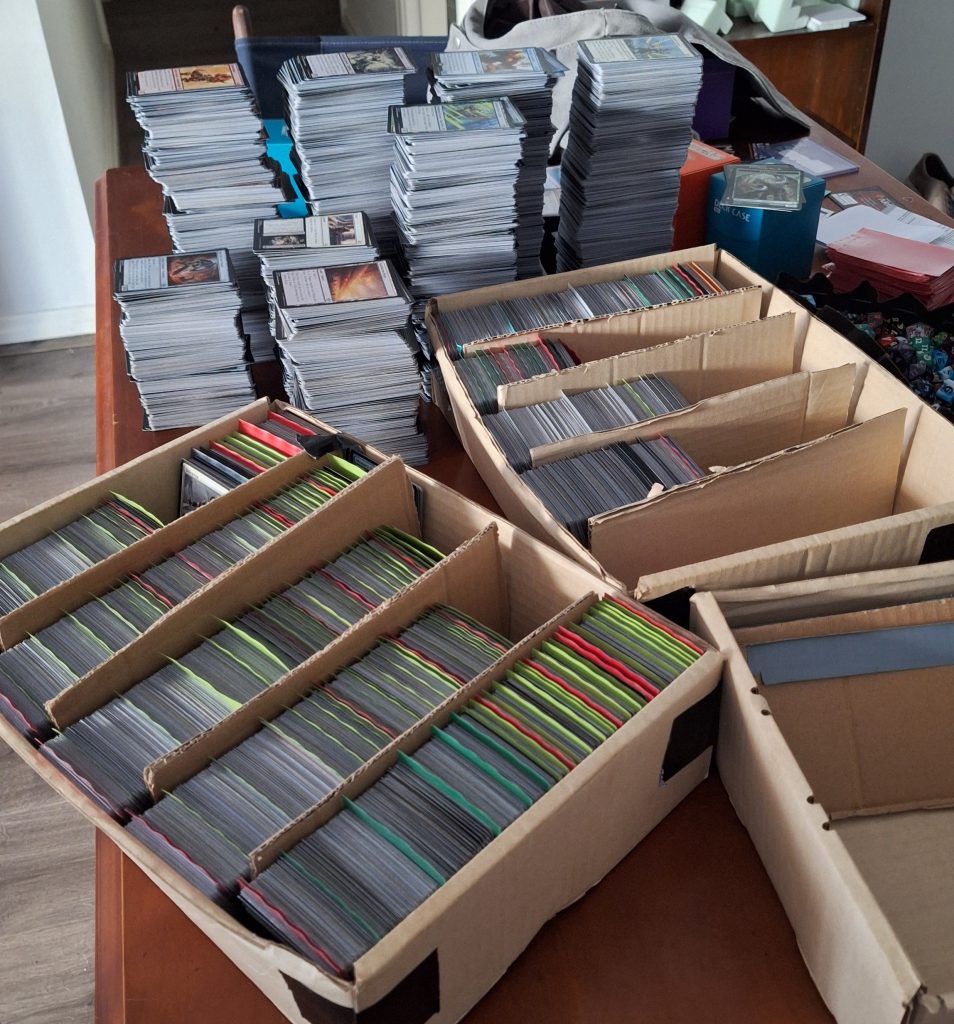
I’ll provide an overview for you here, broken into four steps with helpful* nicknames to remember them: Skipper, Rico, Kowalski, and Private. This should give you an idea of how the process works, and my upcoming articles in this series will expand on each component. There will also be examples, showing how these principles are applied in different contexts.
*Helpful if you remember the penguins from Madagascar. Which of course you do.

Skipper is your gameplan, and he’s in charge. This whole thing doesn’t work unless everybody’s listening to him, so you need to start off knowing who he is and what he wants. Try to put the thing you want your deck to do into a sentence – that’s Skipper.
You can be as vague or specific as you like here; a midrange gameplan could just be ‘play the most efficient cards available’, while a reanimator gameplan might be ‘put a single game-ending threat into play as soon as possible using cheap reanimation effects’. The key is getting it into one sentence you can return to when you’re making decisions later on.
Once you’ve got a plan, it’s time for Rico to cough up the tools you’ll need for the job. Spend some time envisioning what happens in a game where your deck is doing its’ thing, and draft up the roles you’ll need your cards to play. This is also the time to consider how your plan can go sideways, and what you’ll need to recover when it does.
Here that midrange deck might consider groups for hand attack, early threats, midgame threats, and removal; the reanimator deck will need bombs, reanimates, and ways to discard.


Now you have a sketch from Rico, it’s time for Kowalski to run the numbers and decide how many slots to allocate to each role. You’ll have to think about when and how often you want to see each of your cards over the course of a game, factor in how many mulligans you’re comfortable taking, and whether there’s a particular set of cards you really want to see in your opening hand. I use this guide when approximating, but feel free to whip out a calculator.
The midrange example is looking at a fairly even spread of 3-4 hand attack spells, 8 early threats, 5-6 midgame threats, and 8-10 removal spells. On the other hand, reanimator wants as many copies of its key cards as it can fit – and it will need at least nine of each.
Kowalski’s Approximations
1-2: Tutor target/niche utility
3: Want exactly one most games
4-5: Want at least one most games
6-8: Want one every game
9+: Want one every hand
When Kowalski’s finished, you should be left with a template describing all the cards your deck will need. I know you’ve been patient, so now it’s time to flesh out that template by filling it with cards!
This is Private, your fresh-faced first draft. He isn’t the finished product, but you’ll have to let him fail so you can show him how to succeed. Draw some sample hands and play a few games. Make a note if something doesn’t quite feel right, and test it again to see if it’s just nerves, variance or if there is an actual problem.

These four steps will leave you with a deck, but you’re not quite done. Now it’s time to go back over it and identify all its weaknesses in detail. Try to locate the root of the weakness within your deck. Some cards might struggle to find a use in certain matchups, sometimes you don’t have the right kind of card to address a particular threat, and sometimes your gameplan just folds to a certain kind of interaction. If your sideboard can fix it, now is the time, but you might need to revisit your Kowalski, Rico, or even Skipper if it’s bad enough.
There is an unnamed fifth step, because, well, I ran out of penguins. You can call it whatever you want though, because now it’s your deck! I hope you’re proud of it, because it took a lot of work to get here. You’ll tweak and change it as time goes on, but this is the point where it’s finally come together into your thing. Nice job!
Building your own deck is a risk, especially in a format like Australian 7 Point Highlander. It’s full of skilled players with strong decks ready to push you to your limit. But for many of us, it’s also a form of self-expression, a way to make an impression by playing cards nobody else would, and a way to know that you’re the best in the room with the 75 cards you brought to battle. More than teaching you a new technique, I want to encourage you to make your mark on this incredible format.
Stay tuned for the next part of this series!

Jonah “FourM” has been playing MtG since the Khans of Tarkir block. Currently, he enjoys drafting, stomping opponents in Commander and brewing 1-2 decks a week. He’s also working on improving his skillset to make his mark on the RC circuit.
He’s also making weekly videos about his experiences playing 7PH. Check them out here!
