Building a Deck
By DoctorV
Hi all, I’m Varun, or DoctorV if you’re looking for me on the 7PH Discord. Before May 2024 I was exclusively a Commander player, who dabbled with Limited, but nothing knocked my socks off more than cheating a giant Eldrazi into play on turn three. Playing Limited, I realised that I was also quite competitive and really enjoyed 1v1 Magic. I tried to get into the Constructed formats, but like Goldilocks, found they weren’t right for me. Modern was too expensive, Legacy was *really* too expensive, no one played Pauper and Standard didn’t scratch the itch I was looking for. Finally, I found 7 Point Highlander (7PH), and it was just right.
I’ve now been playing 7PH obsessively for about a year now, I think I’ve made about every mistake you could during this formative period. I played nine different archetypes, went 0-7 in a couple of tournaments, had random singles in my deck box and getting told off by a judge, and burned a lot of cash buying cards. Editor’s note: Buying cards is never a mistake.
So why would I, who has had limited success in 7PH, write this guide? And why should you, my dear reader, read it?
“Failure is only the opportunity to begin again. Only by truly knowing [failure] can one understand the triumph of [success].” – Uncle Iroh, Avater: the Last Airbender
I hope my failures can become your successes.
Picking a Deck: Disregard Duals, Play 8pt Decks
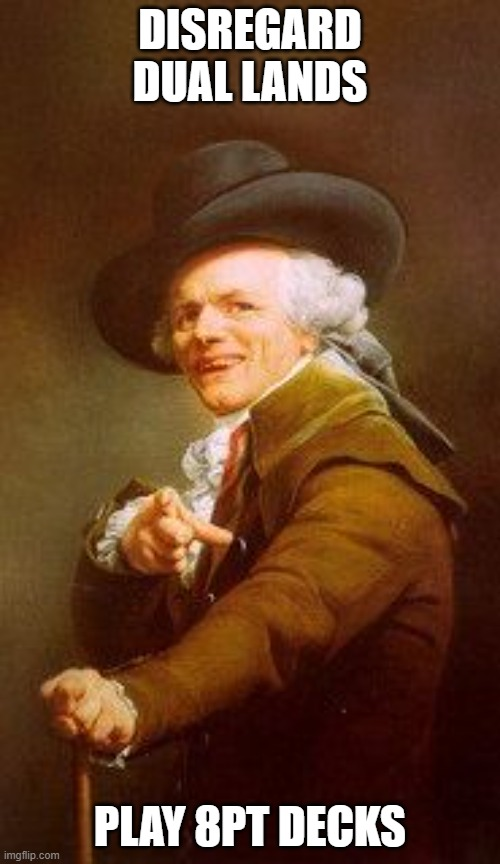
In the last year I’ve played no less than nine different decks across several archetypes: these include Gruul Moon, Izzet Prowess, Traditional Blue Moon, Rakdos Eclipse, and Dimir Tempo. Throughout this experience, I’ve learned three valuable lessons about deck selection.
8pt decks are good, but be mindful about your choices
I used to think the ABUR Dual Lands were necessary to perform well in 7PH. However, recent results have shown that 8pt decks don’t just exist, but can thrive given an appropriate metagame. 8pt Decks like Boros Legends by Henry Fair, Dimir Tempo by Kyle Gibson and, Blue Moon by Peter K have put up Top 8 results in recent tournaments showing dual lands aren’t required to succeed.
As a wise Auntie once said: there has to be a reason to be playing eight points. Don’t just make an 8pt version of a 7pt list by adding a point and removing RL cards, use that extra point.
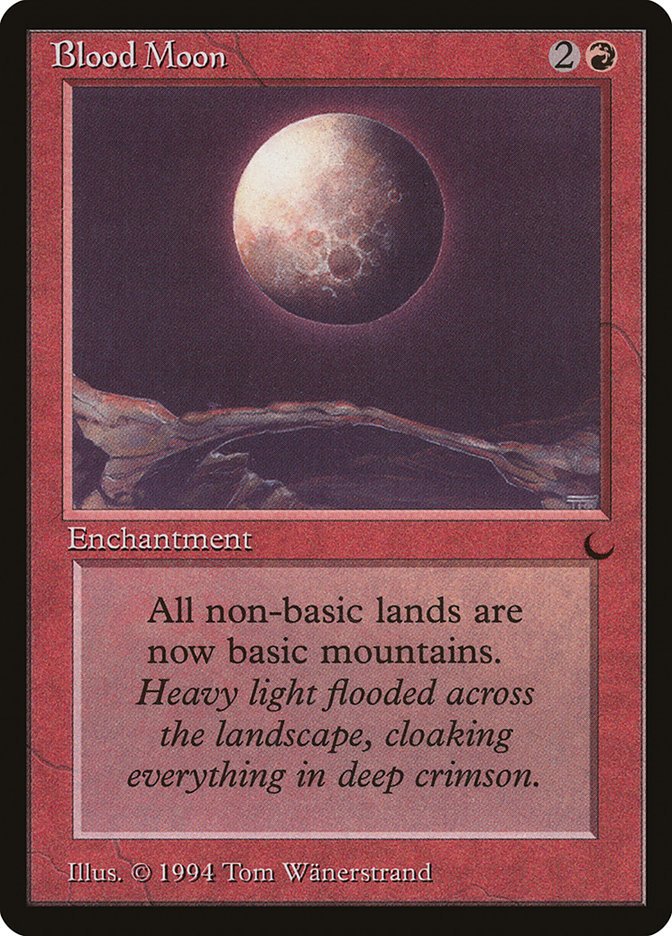
For leaner two-colour 8pt decks, the added mana base simplicity opens up powerful disruptive elements like Back to Basics, Blood Moon and Harbinger of the Seas.


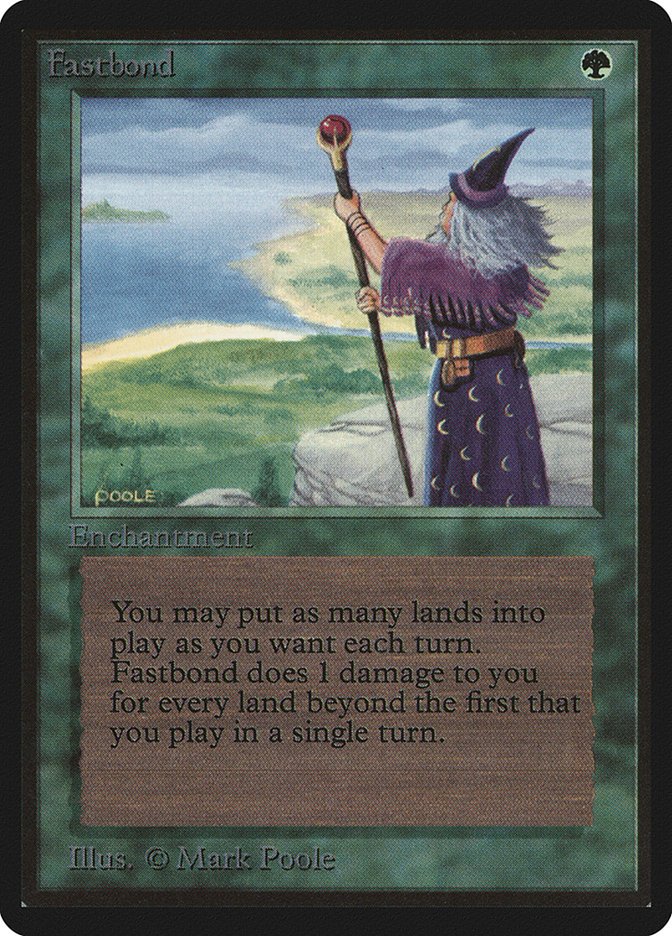
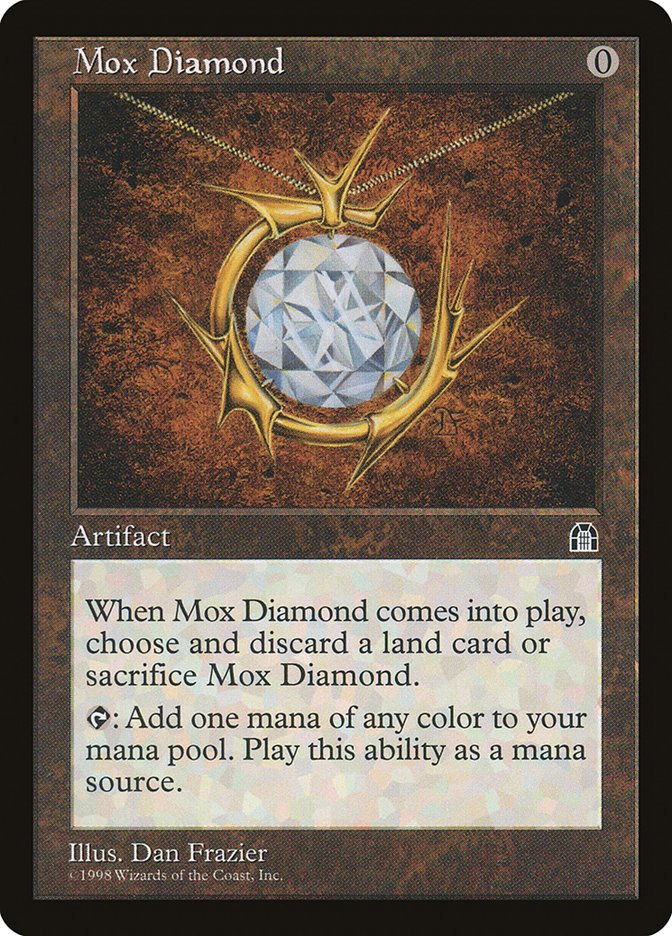
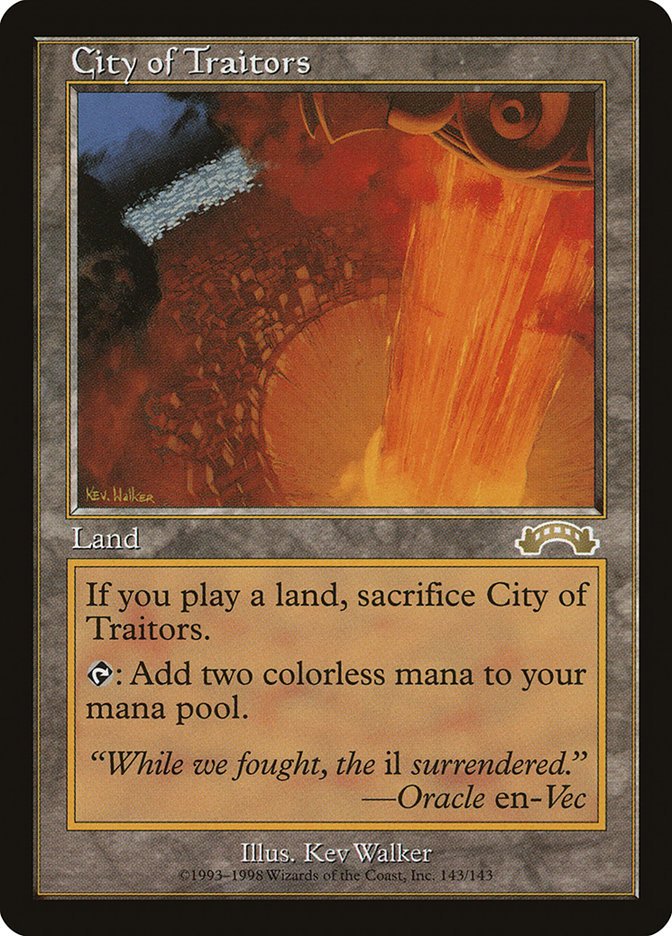
There are, however, many archetypes that are severely limited when opting to play an 8pt version. Decks like Lands or Eclipse require key RL cards like Fastbond, Mox Diamond or City of Traitors, and one should be mindful when examining the possibilities.
Additionally, four-colour and five-colour decks tend to struggle to properly function with Shock Lands. However, the advent of Surveil Lands, in addition to Shocks and Fetches, three-colour 8pt decks have become quite viable.
Perfecting your deck trumps perfecting your list
There are many common pitfalls when exploring 7PH. “I just need one more card”, “This deck isn’t right for this metagame”, and “If only I was playing one more colour” are psychological traps one should identify and avoid when playing Magic.
Ultimately, the metagame flows and shifts in cycles, and organically grows with each new printing and points update. When I played Izzet Prowess seven months ago, it was fine but not amazing. Comparing it to newer lists like Vincent C’s Prowess list that came 28th at the Mana Clash, I realised my deck was not appropriately built and was missing some key cards like Cori-Steel Cutter. By benching it, I had missed out on getting practice with a high-quality archetype and deck.
Instead of constantly changing cards and trying to find the “perfect list”, one must focus on playing one list to the best of their ability. Learn the deck, become an expert pilot, and rebuild the list later with a wealth of experience to draw from.
Play what you love and worry less about winning
If you’ve never played any competitive Magic like me, you’re going to lose more games than you win. If that’s going to happen anyway, make sure you enjoy the games you play!
Finding a deck that does something you enjoy or playing cards you love is critical to ongoing fulfilment. Try to identify groups of cards and lines that really resonate with you.
Do you hate being reactive and just want to slam creatures? Don’t play Blue Moon, play Jund!
Want to perform acts of tax fraud? Don’t play a fair deck, play Reanimator!
Want to take a ten minute turn that may result in your deck bricking, you winning, or you receiving a warning for slow play? Play Nadu!
Editor’s note: Please don’t.
Finding Your First Deck
With those tips in mind, the next step is to pick a deck that you’ll enjoy playing, growing with and mastering. Before you buy any cards or start sleeving up a list, here’s a few reliable ways to explore and discover your first deck.
Browse the Archetypes
- While a little outdated, the Deck Orientation page on this site can be a good starting point.
- Consider decks you’ve enjoyed playing in other formats, and the archetypes they translate to in 7PH.
- Shortlist a few archetypes that match your style and mark some deck names you’ve found.
Look at Real Decklists
- The 7PointEventResults Moxfield account contains real decks from recent 7PH Tournaments.
- Filter for recent events and check out the lists within the archetypes you’re interested in. This will give you a clearer idea of what current builds have in common and what key pointed cards people are playing. Determine what cards you already own, or would be interesting in purchasing.
- If you have a pet card you want to play, search for decks that have the card! This will narrow your focus when sifting through decks and highlight common strategies employing the card.
Use Budget Decklists for Inspiration
VoltieBrews is a series of budget 7PH brews ranging from $75 to $200. The $75 Deck Techs are a perfect way to get straight to playing and dipping your toes into different deck archetypes in a low-risk fashion.
- $75 Mono Black
- $75 Mono Red
- $75 Mono Green Stompy
- $75 Boros Heroic
- $75 Mono White Hatebears
- $75 Blue Moon
Build a Starting List
- Build a full Moxfield deck list containing the cards you own, the cards you are willing to buy, the substitutes you are using and the cards you are missing that you believe you will need in the future. Moxfield is great as it automatically tracks your pointed cards for you!
- Use the Moxfield play test function to give the deck a feel and draw a few opening hands. Do you like what the deck is trying to do?
- Try different configurations. Is the deck you can put together by tomorrow substantially different to a hypothetical version you can build when you next go shopping? What financial and time based constraints are you under?
Get Feedback
- The 7PH Discord hosts several channels that may be relevant to your interests e.g. #midrange, #budget-decks.
- There are also dedicated servers to some popular archetypes, so ask around if you believe there may be a community worth joining.
- Post your deck list with a Moxfield link and ask both general and specific questions.
- Use the feedback to finalise a first version of the deck you can begin testing and improving.
Build it!
- Gather all the cards you own within your deck list.
- Prioritise the singles you plan on buying, factoring in cost, usefulness, importance and any others you feel are appropriate.
- Put it all together, sleeve it up and prepare for your first weekly event!
Getting started with 7PH, as with any other format in Magic, is a daunting task that should not be undertaken lightly. While the first few steps may seem simple, there are many pitfalls to avoid. I hope this outline proves useful in commencing your 7PH journey.
The next part in this series will detail the process of levelling up from small weekly events to larger, more competitive tournaments. Stay tuned!
Acknowledgements: I want to thank Mulch, Panttz and Chris who gave me feedback on this article.

Dr Varun “DoctorV” Venkatesh (he/him)
Varun is a Naarm-based postdoc in molecular endocrinology by day and an aspiring competitive Magic player by night. He picked up Commander during Dominaria United, but fell head over heels for 7 Point Highlander in early 2024 and never looked back. He loves the social side of Magic; meeting new people and building friendships while also strives to improve at Magic. His greatest Magic achievement is a 2-1 Pre-Release finish and he dreams of making the Top 8 at a major 7PH event.
